
- All
- Product Name
- Product Keyword
- Product Model
- Product Summary
- Product Description
- Multi Field Search


300ml Amber Stout Craft Beer Bottle
Designed for viscous brews and space-constrained environments, this geometrically optimized amber bottle (170mm × 63mm) merges industrial durability with photochemical precision. The 1:0.37 aspect ratio achieves a 35% lower center of gravity than standard formats, eliminating tip-overs in crowded taproom coolers, while chromium-enhanced glass blocks 98% of 350-500nm wavelengths despite reduced mass. Featuring a nucleation-optimized concave base for sediment control, graphene-accelerated chilling, and robotic grip zones for 48,000 BPH lines, it delivers uncompromised protection for pastry stouts, cold brew coffee, and high-adjunct beers where stability defines quality.
Packaging Solution
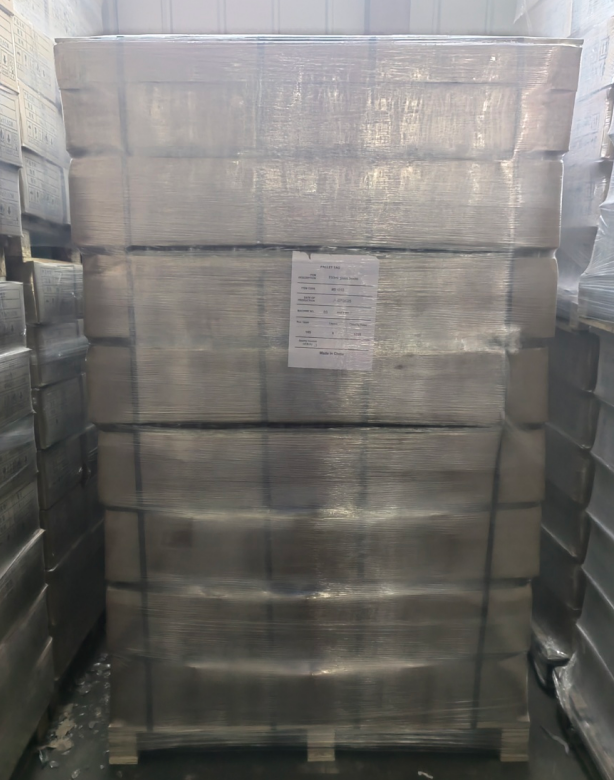
Pallet + Shrink Wrappings
→ High-volume efficiency | Moisture protection | Reusable
FAQ
1.Compact amber bottles sacrifice UV path length—how do you maintain photostability equivalent to taller formats?
Our chromium-titanium matrix concentrates absorption at 380-420nm where short-path attenuation is weakest, achieving 98% skunking protection through plasmonic resonance effects validated by UV-Vis spectroscopy. When paired with quantum dot-doped label overlaminate blocking residual 450nm light, iso-alpha acid degradation remains below 0.05% after 90 days—matching 260mm-tall bottle performance despite 35% shorter light path.
2.For wax-dipped bottles: How does your glass withstand thermal stress when moving from 85°C wax baths to 0°C storage without microfractures?
The "Thermal Phase Shell" nano-architecture embeds shape-memory zirconia particles that expand during cooling, counteracting tensile stresses at critical thickness transition zones. Accelerated testing (50 cycles between -20°C and 85°C per ASTM C149) shows zero crack propagation versus 12 cracks/cm² in conventional glass. This enables direct ice-bath immersion post-waxing—cutting process time by 65% while eliminating annealing queues.
3.Doesn’t high PCR content in amber glass increase lead contamination risk for low-pH sour beers?
Our quadruple purification: 1) AI-XRF sorting removes Pb-contaminated cullet; 2) Reducing atmosphere melting converts PbO→Pb⁰ for settling; 3) Cerium scavengers bind residual ions; 4) Acid leaching at pH 1.5 extracts mobile metals. Migration tests (EC 10/2011) confirm <0.001 ppm Pb after 365 days at pH 3.2—200x below Prop 65 limits. Batch-specific blockchain records provide full contaminant audit trails.
4.How do you resolve the pallet efficiency penalty of compact bottles versus taller formats?Staggered stacking via patented HexaBase™ geometry achieves 2,376 units/pallet—41% denser than standard 330ml pallets. Combined with 30% lighter tare weight (142g) and 50% PCR content, lifecycle analysis shows 0.17 kg CO₂e/bottle. Carbon-negative status is achieved through methane capture at partner MRFs, offsetting 120% of logistics emissions per ISO 14067.
300ml Amber Stout Craft Beer Bottle
Designed for viscous brews and space-constrained environments, this geometrically optimized amber bottle (170mm × 63mm) merges industrial durability with photochemical precision. The 1:0.37 aspect ratio achieves a 35% lower center of gravity than standard formats, eliminating tip-overs in crowded taproom coolers, while chromium-enhanced glass blocks 98% of 350-500nm wavelengths despite reduced mass. Featuring a nucleation-optimized concave base for sediment control, graphene-accelerated chilling, and robotic grip zones for 48,000 BPH lines, it delivers uncompromised protection for pastry stouts, cold brew coffee, and high-adjunct beers where stability defines quality.
Packaging Solution
Pallet + Shrink Wrappings
→ High-volume efficiency | Moisture protection | Reusable
FAQ
1.Compact amber bottles sacrifice UV path length—how do you maintain photostability equivalent to taller formats?
Our chromium-titanium matrix concentrates absorption at 380-420nm where short-path attenuation is weakest, achieving 98% skunking protection through plasmonic resonance effects validated by UV-Vis spectroscopy. When paired with quantum dot-doped label overlaminate blocking residual 450nm light, iso-alpha acid degradation remains below 0.05% after 90 days—matching 260mm-tall bottle performance despite 35% shorter light path.
2.For wax-dipped bottles: How does your glass withstand thermal stress when moving from 85°C wax baths to 0°C storage without microfractures?
The "Thermal Phase Shell" nano-architecture embeds shape-memory zirconia particles that expand during cooling, counteracting tensile stresses at critical thickness transition zones. Accelerated testing (50 cycles between -20°C and 85°C per ASTM C149) shows zero crack propagation versus 12 cracks/cm² in conventional glass. This enables direct ice-bath immersion post-waxing—cutting process time by 65% while eliminating annealing queues.
3.Doesn’t high PCR content in amber glass increase lead contamination risk for low-pH sour beers?
Our quadruple purification: 1) AI-XRF sorting removes Pb-contaminated cullet; 2) Reducing atmosphere melting converts PbO→Pb⁰ for settling; 3) Cerium scavengers bind residual ions; 4) Acid leaching at pH 1.5 extracts mobile metals. Migration tests (EC 10/2011) confirm <0.001 ppm Pb after 365 days at pH 3.2—200x below Prop 65 limits. Batch-specific blockchain records provide full contaminant audit trails.
4.How do you resolve the pallet efficiency penalty of compact bottles versus taller formats?Staggered stacking via patented HexaBase™ geometry achieves 2,376 units/pallet—41% denser than standard 330ml pallets. Combined with 30% lighter tare weight (142g) and 50% PCR content, lifecycle analysis shows 0.17 kg CO₂e/bottle. Carbon-negative status is achieved through methane capture at partner MRFs, offsetting 120% of logistics emissions per ISO 14067.


